
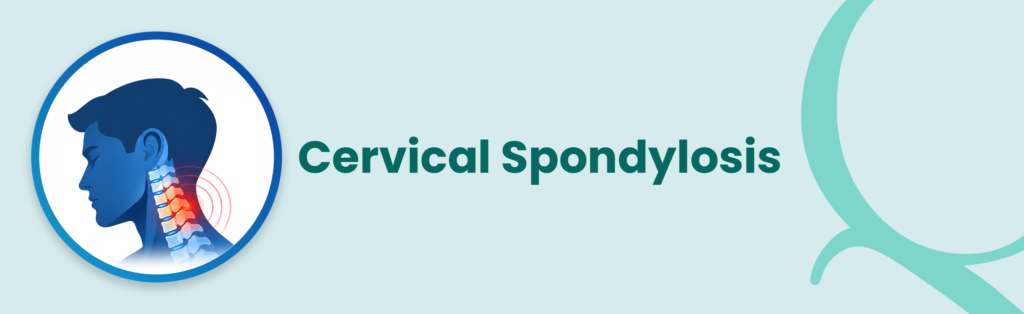
Cervical Spondylosis — Symptoms, Diagnosis and Treatment Options
Neck pain and stiffness can affect people who spend long hours working at a desk, using a computer or performing activities that place repeated strain on the neck. In some cases, the discomfort is related to cervical spondylosis, a condition involving age-related changes in the bones, joints and discs of the neck.
Cervical spondylosis is common, particularly as people get older. Some individuals have changes visible on imaging without experiencing any symptoms. Others develop persistent neck pain, restricted movement or symptoms caused by pressure on nearby nerves.
Understanding the condition can help patients recognise when simple measures may be appropriate and when professional assessment is needed.
What Is Cervical Spondylosis?
The cervical spine consists of seven vertebrae in the neck. Discs between the vertebrae help absorb forces, while joints and ligaments support movement and stability.
Over time, the discs and joints may undergo wear-and-tear changes. Bone spurs can also develop. These changes are commonly described as cervical spondylosis.
In some people, these changes contribute to neck pain or stiffness. If a nerve root becomes compressed, pain, tingling or weakness may spread into the shoulder, arm or hand. In more serious cases, pressure on the spinal cord can affect walking, coordination or bladder and bowel function.
Common Causes and Risk Factors
Age-related changes are a major factor. Other factors that may contribute include:
- Previous neck injury.
- Repeated physical strain.
- Jobs involving heavy lifting or repetitive neck movements.
- Reduced physical activity.
- Certain pre-existing spine conditions.
Everyday posture may influence discomfort, but cervical spondylosis should not be attributed to poor posture alone. The condition involves structural changes that require appropriate assessment when symptoms are significant.
Symptoms of Cervical Spondylosis
Neck pain and stiffness: Pain may be felt in the neck and may worsen with particular movements or prolonged positions.
Shoulder discomfort: Pain may spread towards the shoulder blades or upper arms.
Headaches: Some people experience headaches that begin around the neck or back of the head.
Tingling or numbness: If a nerve is irritated or compressed, unusual sensations may extend into the arm or fingers.
Weakness or reduced coordination:Difficulty gripping objects, weakness in the arms or clumsy hand movements may indicate nerve or spinal cord involvement.
Warning signs: New walking difficulties, progressive weakness or loss of bladder or bowel control require urgent medical assessment.
How Is Cervical Spondylosis Diagnosed?
A clinician will review the patient’s symptoms, medical history and daily activities. The examination may include neck movement, muscle strength, sensation, reflexes, hand coordination and walking.
An X-ray may show age-related changes. MRI or other imaging may be recommended when there are signs of nerve or spinal cord involvement, significant symptoms that persist despite treatment, or concerns about another condition.
Imaging findings must be interpreted alongside symptoms. A scan showing wear-and-tear changes does not necessarily mean that those changes are responsible for every episode of pain.
Treatment Options
1. Activity modification: Avoid repeatedly performing movements that clearly aggravate symptoms. However, prolonged bed rest is generally not the goal. Comfortable movement and a gradual return to usual activities are often encouraged.
2. Physiotherapy: A physiotherapist may recommend exercises to improve neck mobility, strengthen supporting muscles and improve posture during daily activities.
Exercises should be adapted to the patient’s condition. Forceful neck manipulation or unsupervised exercises are not appropriate for every person.
3. Medication:A clinician may recommend pain-relieving medication or other treatment depending on the symptoms, medical history and potential risks.
Avoid taking medication regularly without understanding its suitability and side effects.
4. Changes to the work environment:Adjusting monitor height, chair support and the position of frequently used devices may reduce strain during prolonged work.
Take regular movement breaks rather than holding the neck in one position for extended periods.
5. Surgery in selected cases: Surgery may be considered when there is significant nerve or spinal cord compression, progressive neurological problems or persistent symptoms in carefully selected patients. It is not necessary for everyone with cervical spondylosis.
How Can You Manage Neck Discomfort at Home?
- Use a comfortable work position.
- Take regular breaks from prolonged sitting.
- Follow exercises recommended by a qualified professional.
- Use a wrapped warm or cold pack if it provides relief.
- Avoid forceful neck movements.
- Seek advice if pain persists or neurological symptoms appear.
When Should You Consult a Doctor?
Arrange an assessment for persistent neck pain, worsening stiffness, pain spreading into an arm, or ongoing numbness.
Seek urgent care for progressive weakness, new difficulty walking, loss of coordination or bladder or bowel control. Sudden facial drooping or speech difficulty may indicate a stroke and requires emergency assistance.
Conclusion
Cervical spondylosis does not affect everyone in the same way. Many people can manage symptoms with appropriate non-surgical care, while others need further assessment for nerve or spinal cord compression.
Q1 Hospitals can be considered for evaluation of persistent neck pain, stiffness and related neurological symptoms, with treatment selected according to the diagnosis.
Book your appointment now
Related Blogs

Prostate Cancer: Early Warning Signs, Screening and Treatment Options Prostate cancer is one of the most common cancers affecting men, particularly those above the age of 50. It develops when
Pulmonary Embolism: Warning Signs of a Blood Clot in the Lungs and Emergency Treatment Pulmonary embolism (PE) is a serious medical condition that occurs when a blood clot blocks an
Sudden Hearing Loss: Why Immediate Medical Evaluation Matters Hearing is an important part of everyday communication and helps us stay connected with the people and surroundings around us. However, experiencing
Intestinal Obstruction: Symptoms, Causes and Emergency Treatment Intestinal obstruction is a serious medical condition in which the normal movement of food, fluids, digestive contents and gas through the intestines becomes

Ovarian Cysts: Types, Symptoms and When Surgery May Be Required Ovarian cysts are fluid-filled sacs or pockets that develop in or on the ovaries. They are common among women of
Why Does My Heel Hurt When I Take My First Steps in the Morning? Heel pain during the first few steps after waking up is a common complaint. Some people