
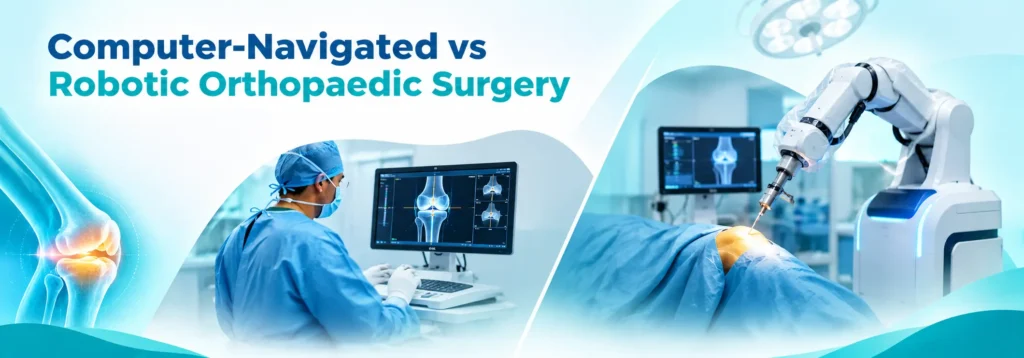
Computer-Navigated vs Robotic Orthopaedic Surgery: Understanding the Differences
Advancements in medical technology have significantly changed the way orthopaedic surgeries are planned and performed. Procedures involving joint replacement, bone alignment and other musculoskeletal conditions increasingly use specialised technologies to provide additional information and guidance to surgeons. Two important developments in this area are computer-navigated surgery and robotic-assisted orthopaedic surgery.
Although both technologies use computer-based systems to support surgical procedures, they are not exactly the same. They have different functions, capabilities and applications depending on the type of surgery being performed.
For patients searching for robotic orthopaedic surgery in Vizag, understanding these technologies can help them learn about modern treatment options. Q1 Hospitals in Visakhapatnam offers orthopaedic services supported by robotic-assisted and computer-navigation technologies.
Understanding Modern Orthopaedic Surgery
Orthopaedic surgery focuses on treating conditions affecting bones, joints, muscles, ligaments and other supporting structures.
Traditional surgical techniques rely on the surgeon’s training, clinical judgement, experience and specialised instruments.
Modern technologies provide additional information and assistance during selected procedures. They can support surgical planning, alignment assessment and the positioning of implants.
The main objective is to help surgeons plan and perform procedures according to the patient’s individual anatomical requirements
What Is Computer-Navigated Orthopaedic Surgery?
Computer-navigated surgery uses specialised computer systems to provide real-time information about anatomical structures and surgical positioning.
The technology helps surgeons assess alignment and monitor certain surgical parameters during selected procedures.
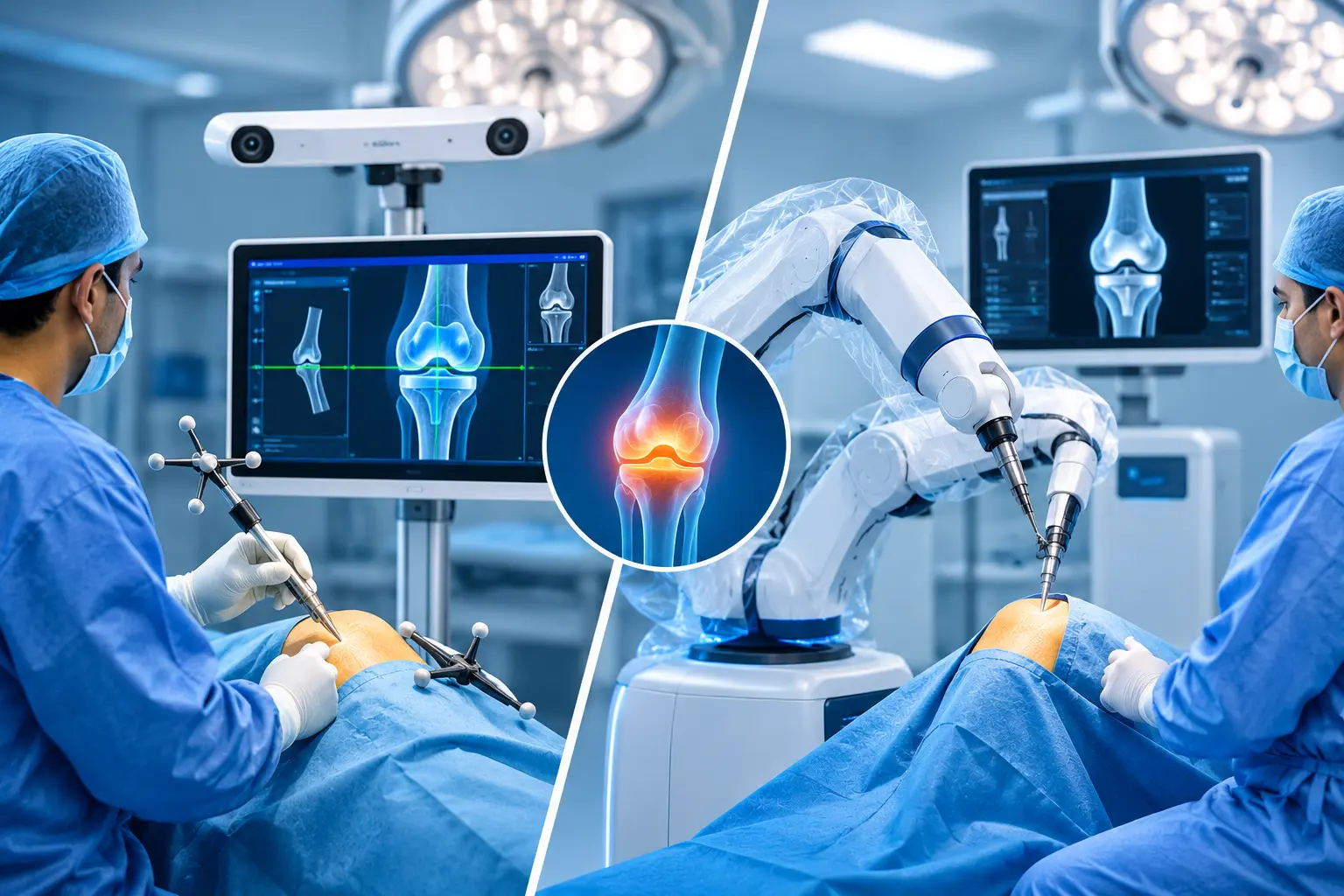
In joint replacement surgery, navigation systems may provide information about the position and alignment of bones and surgical instruments.
How Does Computer Navigation Work?
Computer-navigation systems generally involve several stages.
- Patient Assessment: The surgeon evaluates the patient’s condition and reviews available diagnostic information.
- System Preparation: Depending on the technology, specialised tracking devices or reference markers may be positioned.
- Anatomical Assessment: The system collects information about the relevant anatomical structures.
- Real-Time Guidance: The computer provides information to help the surgeon assess alignment and positioning during selected surgical steps.
- Surgical Completion: The surgeon uses the information alongside clinical judgement to complete the procedure.
The exact process depends on the navigation platform and surgical technique.
What Is Robotic-Assisted Orthopaedic Surgery?
Robotic-assisted orthopaedic surgery uses specialised robotic technology to support selected surgical procedures.
The system may help with preoperative planning, anatomical assessment and guidance during specific stages of surgery.
In joint replacement procedures, robotic-assisted platforms can support the surgeon in planning bone preparation and implant positioning.
The robotic system does not independently decide the treatment or perform the entire operation. The surgeon controls the procedure and remains responsible for all clinical decisions.
Key Differences Between Computer Navigation and Robotic Surgery
Both technologies support modern orthopaedic procedures, but their functions are different.
Technology: Computer navigation primarily provides digital information and guidance about anatomical structures and surgical positioning. Robotic-assisted systems may combine computer-based planning with specialised robotic instruments or guidance mechanisms.
Surgical Planning: Navigation systems provide information that supports surgical decision-making. Robotic platforms may offer additional planning tools depending on the system.
Procedural Assistance: Computer navigation tracks and displays selected surgical parameters. Robotic-assisted systems may provide guidance or controlled boundaries for certain surgical steps.
Surgeon Control: In both approaches, the surgeon remains responsible for performing the operation.
Applications: Both technologies may be used in selected orthopaedic procedures, particularly joint replacement, depending on the system and clinical requirements.
Robotic and Navigation Technologies Available at Q1 Hospitals
Q1 Hospitals in Visakhapatnam has specialised orthopaedic technologies, including ROSA by Zimmer Biomet, Navio by Smith+Nephew and Ortho Pilot computer-navigation technology.
These systems support different aspects of selected joint replacement procedures.
1. ROSA by Zimmer Biomet
ROSA is a robotic-assisted surgical platform used for selected knee replacement procedures.
It provides information that helps surgeons assess joint anatomy, plan the procedure and evaluate alignment.
The technology supports surgical decision-making while the surgeon remains in control of the operation.
2. Navio by Smith+Nephew
Navio is a robotic-assisted orthopaedic surgical platform designed to support selected joint replacement procedures.
It provides computer-assisted guidance to help surgeons plan and perform specific surgical steps.
Its use depends on the patient’s joint condition and the procedure being considered.
3. Ortho Pilot Computer Navigation
Ortho Pilot is a computer-navigation technology used in selected orthopaedic procedures.
It provides additional information about alignment and positioning, helping surgeons make informed decisions during surgery.
These technologies have different functions, and their suitability depends on the specific operation.
Potential Benefits of Technology-Assisted Orthopaedic Surgery
Robotic-assisted and computer-navigation systems may offer several advantages in selected procedures.
- Support for individualised surgical planning.
- Additional information about joint alignment.
- Guidance during selected surgical steps.
- Assistance with implant positioning.
- Better visualisation of certain surgical parameters.
- Support for procedure-specific decision-making.
However, technology alone does not guarantee better outcomes. Results depend on several factors, including the surgeon’s experience, the patient’s condition, implant selection and postoperative rehabilitation.
Which Patients May Benefit From These Technologies?
Technology-assisted orthopaedic surgery may be considered for selected patients requiring joint replacement or other procedures where the system has an appropriate application.
Patients with advanced knee arthritis, significant joint degeneration or certain structural joint problems may be evaluated for these approaches.
The surgeon considers:
- The type and severity of the condition.
- The patient’s bone and joint anatomy.
- Medical history and overall health.
- The surgical procedure required.
- The suitability of the available technology.
Not every patient requires robotic or computer-navigation assistance. Conventional surgical methods may also be appropriate for many conditions.
Recovery After Technology-Assisted Orthopaedic Surgery
Recovery depends on the type of procedure rather than the technology alone.
Patients undergoing joint replacement may require physiotherapy, pain management and gradual improvement in mobility.
The recovery process generally includes:
Postoperative Monitoring: The medical team monitors the patient’s condition and provides appropriate care.
Physiotherapy: Prescribed exercises help improve strength and joint movement.
Mobility Training: Patients gradually practise standing and walking with suitable support.
Follow-Up Care: Medical reviews help assess healing and functional improvement.
Patients should follow their surgeon’s recommendations and avoid activities that may interfere with recovery.
Importance of Choosing the Right Orthopaedic Specialist
Advanced technology is only one part of successful orthopaedic treatment. The surgeon’s qualifications, clinical experience and ability to select the right procedure are equally important.
Dr. Ramana Murthy T is associated with Q1 Hospitals and has specialised expertise in joint replacement and arthroscopic procedures.
He holds an MS in Orthopaedics from Nizam’s Institute of Medical Sciences (NIMS), Hyderabad, and has received specialised fellowship training in Germany.
Patients should discuss the advantages, limitations, possible complications and expected outcomes of different surgical approaches with their treating specialist.
Orthopaedic Technology and Patient Care at Q1 Hospitals
Q1 Hospitals provides orthopaedic services for patients experiencing bone, joint and musculoskeletal conditions.
Its treatment capabilities include joint replacement, arthroscopy and orthopaedic trauma management, supported by robotic-assisted and computer-navigation systems.
The hospital’s orthopaedic team evaluates patients and recommends suitable treatment options according to individual medical requirements.
A combination of specialist assessment, appropriate surgical planning and rehabilitation plays an important role in orthopaedic care.
Conclusion
Computer-navigated and robotic-assisted orthopaedic surgery represent important developments in modern surgical practice. Both technologies provide additional assistance to surgeons, but they differ in their functions and applications.
Computer navigation primarily provides digital guidance and alignment information, while robotic-assisted systems can offer additional support during surgical planning and selected procedural steps.
Neither technology replaces the surgeon’s clinical expertise, and the appropriate approach depends on the patient’s condition and surgical requirements.
Q1 Hospitals in Visakhapatnam offers orthopaedic treatment supported by ROSA, Navio and Ortho Pilot technologies. Patients considering joint replacement or other orthopaedic procedures can consult a specialist to understand the available treatment options and determine the most appropriate approach for their condition.
Book your appointment now
Related Blogs

Knee Joint Pain: Common Causes, Warning Signs and When to See an Orthopaedic Doctor Knee joint pain is one of the most common musculoskeletal complaints affecting people across different age
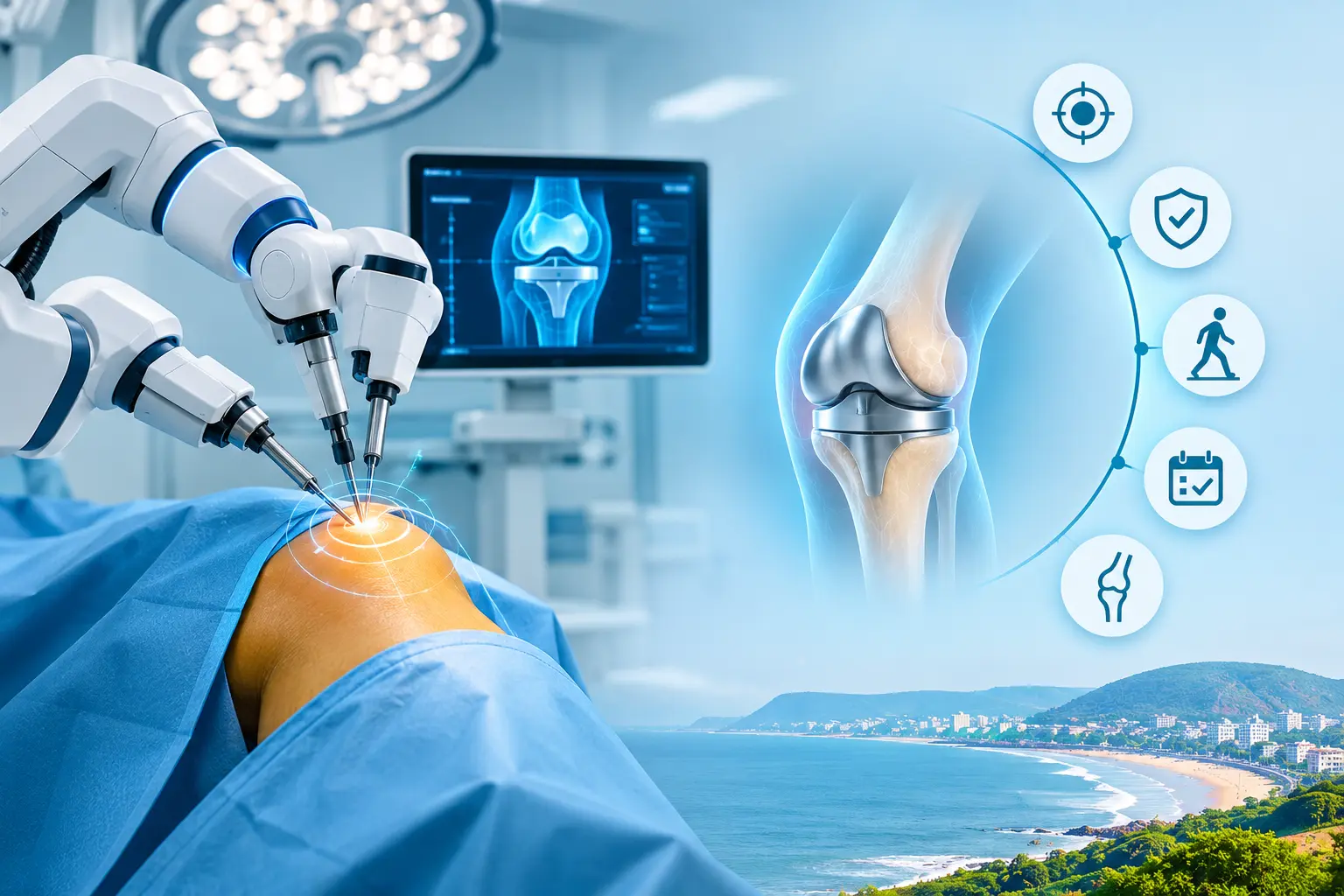
Robotic Knee Replacement Surgery in Vizag: Technology, Benefits and Recovery Knee pain is one of the most common orthopaedic problems affecting people across different age groups. Conditions such as osteoarthritis,
Computer-Navigated vs Robotic Orthopaedic Surgery: Understanding the Differences Advancements in medical technology have significantly changed the way orthopaedic surgeries are planned and performed. Procedures involving joint replacement, bone alignment and

Early Warning Signs of a Brain Stroke: Symptoms You Should Never Ignore A brain stroke is a serious medical emergency that occurs when the blood supply to a part of
What Makes Q1 Hospitals a Leading Orthopaedic Hospital in Andhra Pradesh? Bone and joint health plays an important role in maintaining mobility, independence and overall quality of life. Conditions such

Who Is the Best Orthopaedic Doctor in Vizag? Meet Dr. Ramana Murthy T Orthopaedic health plays an important role in maintaining an active and comfortable lifestyle. From knee and hip