
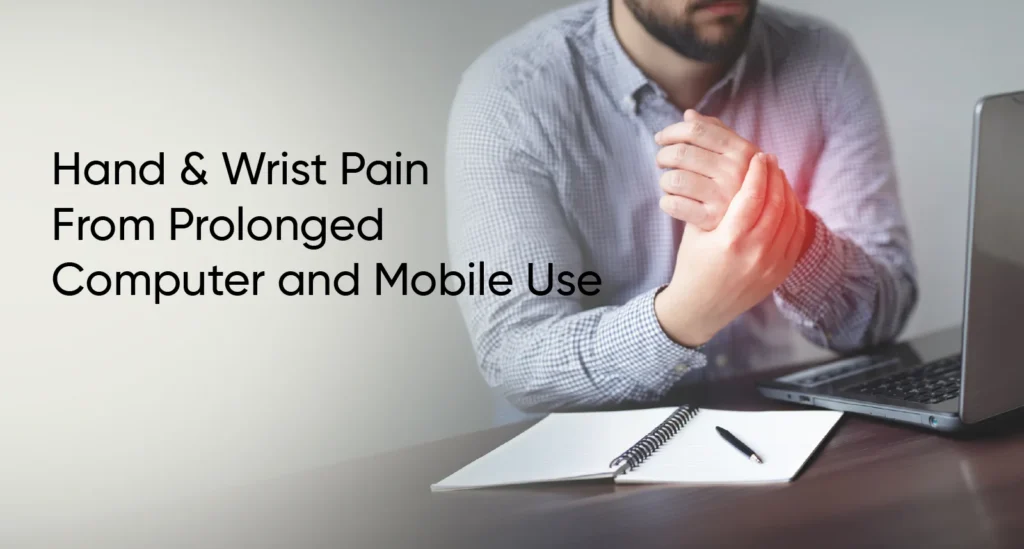
Hand and Wrist Pain From Long Hours of Computer and Mobile Use
In today’s digital lifestyle, computers, laptops, tablets, and smartphones have become part of everyday work and communication. Spending several hours typing, clicking, scrolling, texting, or holding a device can place repeated stress on the hands and wrists. Over time, this may lead to hand and wrist pain, stiffness, numbness, tingling, or reduced movement.
Although occasional discomfort may improve with rest, persistent symptoms should not be ignored. Understanding the causes and adopting healthier device-use habits can help protect wrist and hand function.
Why Does Prolonged Computer and Mobile Use Cause Wrist Pain?
The hands and wrists contain multiple small bones, joints, tendons, ligaments, muscles, and nerves that work together to produce precise movements. Repetitive activities can place continuous strain on these structures.
When using a keyboard or mouse for long periods, the wrist may remain in the same position for extended durations. Similarly, repeatedly typing or scrolling on a smartphone can require continuous movement of the thumb and fingers. Maintaining awkward wrist positions or gripping a phone tightly may further increase stress.
Repeated movements without adequate breaks can contribute to irritation of tendons and surrounding tissues. In some people, prolonged pressure around the wrist may also affect nerves, resulting in symptoms such as tingling or numbness.
Common Symptoms to Watch For
Hand and wrist problems associated with prolonged device use can develop gradually. Common symptoms include:
- Wrist or hand pain
- Stiffness after prolonged computer use
- Aching or burning sensations
- Tingling or numbness in the fingers
- Thumb discomfort from repetitive smartphone use
- Weakness while gripping objects
- Difficulty performing fine hand movements
- Pain that becomes worse with continued activity
Symptoms may affect one or both hands depending on work habits, device use, posture, and individual factors.
How Can You Reduce Hand and Wrist Strain?
Simple changes to your daily routine can help reduce repetitive stress on the hands and wrists.
Take regular breaks: Avoid using a computer or phone continuously for long periods. Short, frequent breaks allow the hands and wrists to relax.
Maintain a neutral wrist position: While typing, try to keep your wrists comfortable and relatively straight instead of continuously bending them upward or downward.
Improve your workstation: Position your keyboard and mouse so that your shoulders remain relaxed and your wrists are not forced into an uncomfortable position.
Reduce unnecessary gripping: When using a smartphone, avoid holding it tightly for extended periods. Whenever possible, alternate hands or use both hands for tasks that require prolonged interaction.
Stretch and move: Gentle movements of the fingers, hands, and wrists between periods of device use can help prevent prolonged stiffness.
Pay attention to symptoms: If pain, numbness, weakness, or tingling continues despite reducing activity, professional evaluation is advisable.
When Should You Consult an Orthopedic Specialist?
Persistent hand or wrist pain should not automatically be attributed to excessive computer or mobile use. Conditions such as tendon problems, nerve compression, joint disorders, or other musculoskeletal issues can produce similar symptoms.
A specialist can assess your symptoms, medical history, hand and wrist movement, and other relevant factors to determine the possible cause. Depending on the condition, treatment may involve activity modification, medication, physiotherapy, supportive measures, or other appropriate interventions.
At Q1 Hospitals, Dr. Ramana Murthy T., MS (Ortho), NIMS, FRAS (Germany), Senior Consultant Ortho Surgeon, provides orthopedic care. Q1 Hospitals also offers arthroscopy services, with wrist conditions among the problems that may be evaluated through arthroscopic assessment when clinically appropriate.
Protect Your Hands and Wrists in the Digital Age
Computer and smartphone use is unlikely to disappear from daily life, but prolonged and repetitive use does not have to mean persistent wrist discomfort. Maintaining better posture, taking regular breaks, avoiding excessive gripping, and responding early to symptoms can help reduce unnecessary strain.
If hand or wrist pain continues, becomes more frequent, or is accompanied by numbness, tingling, weakness, or difficulty moving the hand, seek an orthopedic evaluation rather than continuing to work through the discomfort.
For expert orthopedic evaluation and treatment, you can explore Q1 Hospitals’ Joint Replacement Surgery and orthopedic services. Wrist and finger joint procedures are among the joint treatments available when significant joint damage requires specialized care.
Book your appointment now
Related Blogs

Diagnosing the Real Source of Chronic Lower Back Pain Chronic lower back pain is more than a temporary discomfort. When pain continues for weeks or repeatedly returns, it can affect

Why Do Some Sports Injuries Keep Coming Back? For athletes and active individuals, recovering from a sports injury can be frustrating—especially when the same pain or problem returns after you

Living With Arthritis: Everyday Ways to Protect Your Joints Arthritis can make everyday activities such as walking, climbing stairs, getting up from a chair, or completing household tasks more difficult.

Arthritis in Younger Adults: What Causes It and How Is It Managed Arthritis is often associated with ageing, but joint pain, stiffness, and inflammation can also affect younger adults. When

Common Arthritis Myths Patients Should Stop Believing Arthritis is one of the most common causes of joint pain, stiffness, and difficulty with movement. Yet, many patients continue to rely on

Poor Posture and Back Pain: How Everyday Habits Affect Your Spine Back pain has become increasingly common in everyday life, and poor posture is one of the habits that can