
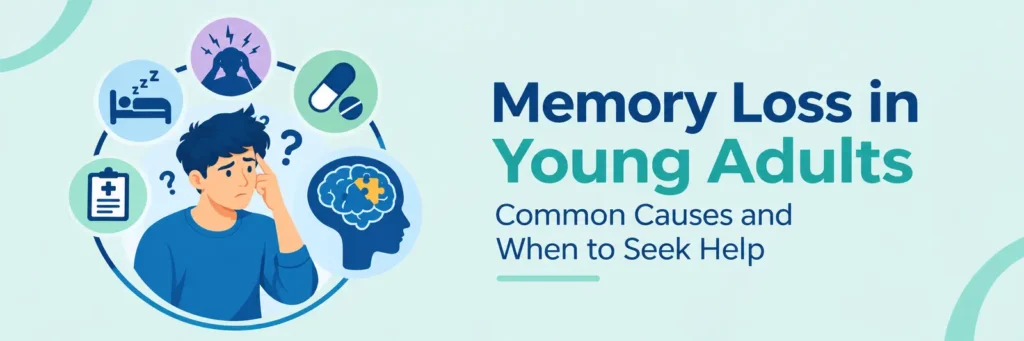
Memory Loss in Young Adults — Common Causes and When to Seek Help
Forgetting a person’s name, misplacing belongings or struggling to remember information can happen to anyone. Young adults may notice these problems during stressful periods, after poor sleep or when managing several responsibilities at once. However, repeated memory difficulties that interfere with work, studies or daily activities should not be ignored.
Memory problems do not automatically indicate a serious neurological condition. They can be associated with sleep difficulties, stress, medication effects and several treatable medical conditions. Understanding when forgetfulness is ordinary and when it needs assessment is an important first step.
How Does Memory Work?
Memory involves several processes, including learning new information, storing it and recalling it when needed. Attention also plays an important role. If someone is distracted while receiving information, they may not remember it later because it was never fully registered.
For example, a person who forgets where they placed their phone while multitasking may have an attention problem rather than a problem with long-term memory.
Persistent difficulties remembering recently learned information, repeating the same questions or losing the ability to manage familiar tasks may require further assessment.
Common Causes of Memory Problems in Young Adults
1. Poor sleep: Sleep supports attention, learning and memory. Insufficient sleep or an irregular sleep schedule can make it harder to concentrate and remember information.
2. Stress and anxiety:High stress can affect concentration. When attention is occupied by worries, it becomes more difficult to process and recall information.
3. Low mood: Depression and other mental health difficulties can affect motivation, attention and memory. Appropriate assessment can help identify the underlying problem.
4. Medication effects: Some prescription medicines and other substances can affect alertness or memory. A clinician can review possible effects and interactions.
5. Nutritional or medical conditions: Certain deficiencies, thyroid disorders and other medical conditions may contribute to cognitive symptoms. Testing should be guided by the person’s history and examination rather than assuming that a specific deficiency is responsible.
6. Neurological conditions: Some neurological conditions can affect memory, but they are not the most likely explanation for every young adult experiencing forgetfulness. New, progressive or unusual symptoms warrant professional assessment.
Symptoms You Should Pay Attention
Consider seeking an assessment if you regularly experience:
- Difficulty remembering recently learned information.
- Repeatedly asking the same questions.
- Increasing difficulty concentrating on routine tasks.
- Forgetting important appointments or responsibilities.
- Difficulty following familiar instructions.
- Memory problems that interfere with work, education or relationships.
- A noticeable worsening of symptoms over time.
The context matters. Occasional forgetfulness during a busy week differs from persistent difficulties that affect independent daily functioning.
How Are Memory Problems Evaluated?
A healthcare professional may ask when the symptoms started, how frequently they occur and whether they are getting worse.
The assessment may cover:
- Sleep patterns and stress.
- Mood and mental health.
- Medication and substance use.
- Recent illnesses or injuries.
- Other neurological symptoms.
- Medical history and daily functioning.
Depending on the findings, a clinician may recommend cognitive screening, blood tests or further neurological assessment. Not every patient needs brain imaging.
Practical Ways to Support Memory
Maintain a consistent sleep routine
Aim for sufficient, regular sleep and address persistent sleep difficulties with professional guidance.
Reduce distractions
When learning something important, focus on one task at a time. Repeat key information or write it down to support recall.
Use reminders
Calendars, alarms, written checklists and fixed locations for everyday belongings can reduce the impact of forgetfulness.
Maintain physical activity
Regular physical activity supports general health and may benefit cognitive health. Choose an activity suitable for your fitness and medical circumstances.
Address stress
Break large tasks into smaller steps, take appropriate breaks and seek help if stress or low mood becomes persistent.
Review health concerns
Do not start supplements or stop prescribed medicines simply because you suspect they are affecting your memory. Discuss persistent symptoms with a healthcare professional.
When Should You Seek Medical Help?
Arrange an assessment if memory difficulties persist, worsen or interfere with everyday responsibilities.
Seek emergency care if confusion begins suddenly, particularly with facial drooping, weakness, speech difficulties, seizure, severe headache or a recent significant head injury.
Sudden confusion is different from ordinary forgetfulness and may indicate a serious medical problem.
Conclusion
Memory difficulties in young adults can have several explanations, including sleep problems, stress, medication effects and medical conditions. Identifying the underlying cause is more useful than assuming that every episode of forgetfulness indicates a neurological disorder.
Q1 Hospitals can be considered for medical assessment when memory concerns are persistent or accompanied by other symptoms. The appropriate evaluation and treatment depend on the individual’s findings.
Book your appointment now
Related Blogs

Prostate Cancer: Early Warning Signs, Screening and Treatment Options Prostate cancer is one of the most common cancers affecting men, particularly those above the age of 50. It develops when
Pulmonary Embolism: Warning Signs of a Blood Clot in the Lungs and Emergency Treatment Pulmonary embolism (PE) is a serious medical condition that occurs when a blood clot blocks an
Sudden Hearing Loss: Why Immediate Medical Evaluation Matters Hearing is an important part of everyday communication and helps us stay connected with the people and surroundings around us. However, experiencing
Intestinal Obstruction: Symptoms, Causes and Emergency Treatment Intestinal obstruction is a serious medical condition in which the normal movement of food, fluids, digestive contents and gas through the intestines becomes

Ovarian Cysts: Types, Symptoms and When Surgery May Be Required Ovarian cysts are fluid-filled sacs or pockets that develop in or on the ovaries. They are common among women of
Why Does My Heel Hurt When I Take My First Steps in the Morning? Heel pain during the first few steps after waking up is a common complaint. Some people