
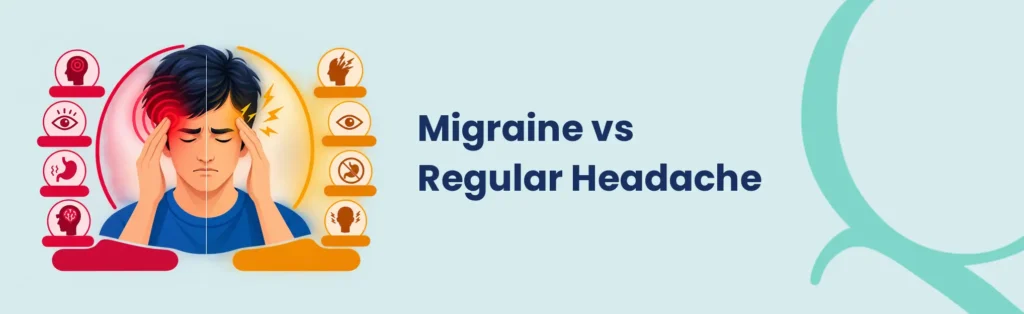
Migraine vs Regular Headache — Symptoms, Causes and Treatment
Headaches are common, but not every headache has the same cause. Some people experience mild discomfort after a long day at work, while others develop severe, recurring headaches accompanied by nausea or sensitivity to light.
Migraine is a neurological condition that can significantly affect daily activities. Understanding the differences between migraine and other types of headache can help people seek appropriate treatment, recognise warning signs and reduce the impact of recurring episodes.
A headache pattern alone cannot establish a diagnosis. Persistent, severe or changing headaches should be assessed by a healthcare professional.
What Is the Difference Between Migraine and a Regular Headache?
A tension-type headache often causes pressure or a tight sensation around the forehead, temples or back of the head. The pain is commonly mild to moderate, although severity varies.
Migraine can cause moderate to severe pain and may be accompanied by nausea, vomiting, sensitivity to light or sensitivity to sound. The pain may be felt on one side of the head, but it can affect both sides.
Some people experience an aura before or during a migraine. Aura can involve temporary visual changes, tingling or speech-related symptoms.
Not every migraine causes the same symptoms, and some other headache disorders can resemble migraine.
Common Causes and Triggers
The underlying mechanisms of migraine are complex. Several factors may contribute to attacks or make them more likely in susceptible individuals.
Commonly reported triggers include:
- Inadequate sleep or changes in sleep routine.
- Skipping meals or going long periods without eating.
- Dehydration.
- Stress or changes in stress levels.
- Hormonal changes.
- Certain foods, drinks or sensory environments.
- Bright lights, loud sounds or strong smells.
Triggers vary between individuals. A food or activity that affects one person may not affect another.
Frequent use of some pain-relieving medicines can also contribute to medication-overuse headaches. People with recurring headaches should discuss medicine use with a clinician.
Symptoms That May Suggest Migraine
Migraine symptoms can include:
- Moderate or severe head pain.
- Throbbing or pulsating discomfort.
- Pain that worsens during ordinary physical activity.
- Nausea or vomiting.
- Sensitivity to light or sound.
- Difficulty concentrating.
- Temporary visual or sensory symptoms in people who experience aura.
- Tiredness before or after an episode.
Some migraine attacks last for hours or several days. The pattern, duration and associated symptoms can help a clinician distinguish migraine from other causes.
How Is Migraine Diagnosed?
Diagnosis generally involves discussing the patient’s headache history, symptoms, frequency, duration and possible triggers.
A clinician may ask:
- When did the headaches begin?
- How often do they occur?
- Where is the pain located?
- Are there associated symptoms such as nausea or visual changes?
- Which medicines are being used?
- Is the headache pattern changing?
A neurological examination may be performed. Imaging or other tests are not required for every headache, but may be recommended when the symptoms or examination suggest another cause.
Treatment Options
1. Treatment during an attack ; A healthcare professional may recommend appropriate medicines to relieve pain or other migraine symptoms. Treatment choice depends on the diagnosis, the severity of attacks, other medical conditions and current medicines. Taking medication too frequently can cause additional problems, so follow professional guidance.
2. Preventive treatment : People with frequent, prolonged or disabling attacks may benefit from preventive medication. A clinician can assess whether preventive treatment is suitable.
3. Lifestyle management ; Regular sleep, consistent meals, adequate hydration and physical activity may help some people manage migraine. The aim is to develop a routine that is sustainable rather than following unnecessarily restrictive rules.
4. Keeping a headache diary : Recording the date, duration, symptoms, sleep, meals, possible triggers and medication use may help identify patterns and support treatment decisions.
When Is a Headache an Emergency?
Seek emergency medical attention for a sudden, extremely severe headache, particularly one that reaches maximum intensity within seconds or minutes.
Urgent assessment is also necessary when a headache occurs with new weakness, facial drooping, difficulty speaking, confusion, seizure, loss of consciousness, fever with a stiff neck or a significant head injury.
New neurological symptoms should not automatically be assumed to be migraine aura, especially when they are sudden or unfamiliar.
Conclusion
Migraine and other headaches can affect concentration, work, sleep and quality of life. Identifying the headache pattern and choosing appropriate treatment can help patients manage recurring symptoms.
Q1 Hospitals encourages patients with frequent, severe or changing headaches to seek professional assessment rather than relying on repeated self-medication.
Book your appointment now
Related Blogs

Prostate Cancer: Early Warning Signs, Screening and Treatment Options Prostate cancer is one of the most common cancers affecting men, particularly those above the age of 50. It develops when
Pulmonary Embolism: Warning Signs of a Blood Clot in the Lungs and Emergency Treatment Pulmonary embolism (PE) is a serious medical condition that occurs when a blood clot blocks an
Sudden Hearing Loss: Why Immediate Medical Evaluation Matters Hearing is an important part of everyday communication and helps us stay connected with the people and surroundings around us. However, experiencing
Intestinal Obstruction: Symptoms, Causes and Emergency Treatment Intestinal obstruction is a serious medical condition in which the normal movement of food, fluids, digestive contents and gas through the intestines becomes

Ovarian Cysts: Types, Symptoms and When Surgery May Be Required Ovarian cysts are fluid-filled sacs or pockets that develop in or on the ovaries. They are common among women of
Why Does My Heel Hurt When I Take My First Steps in the Morning? Heel pain during the first few steps after waking up is a common complaint. Some people