
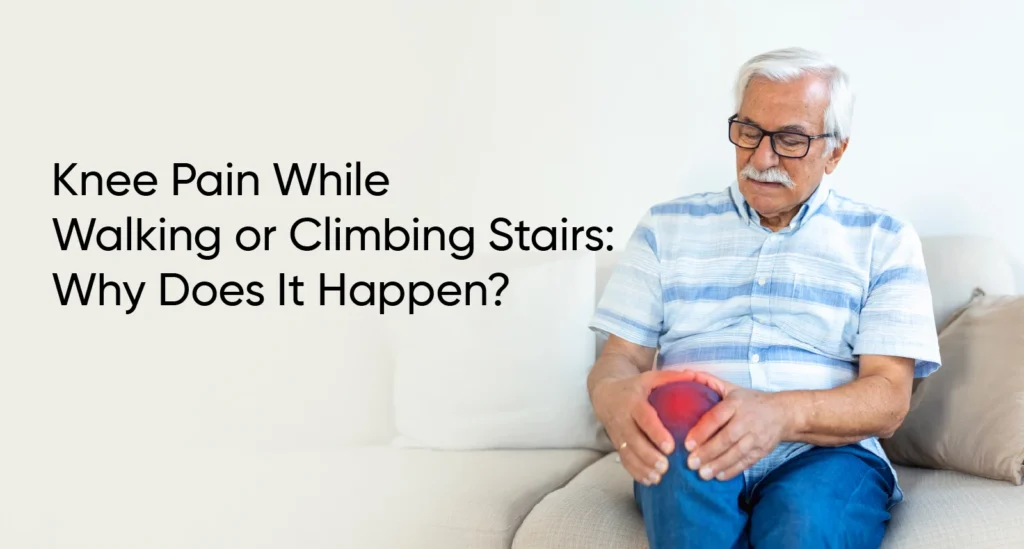
Knee Pain While Walking or Climbing Stairs: What Could Be the Cause?
Knee pain while walking or climbing stairs is a common problem that can affect people of different ages. You may notice pain while taking the first few steps, walking for a long distance, standing up from a chair, or going upstairs and downstairs. While occasional discomfort may result from overuse or strain, persistent knee pain can sometimes indicate an underlying joint or musculoskeletal condition.
Understanding the possible causes can help you recognize when knee pain needs professional evaluation.
Why Does Knee Pain Occur While Walking or Climbing Stairs?
The knee is a weight-bearing joint that helps support the body during standing, walking, running, and climbing. Activities such as climbing stairs place additional demands on the knee joint. If the bones, cartilage, muscles, tendons, or ligaments are affected, these movements may become painful.
Several conditions can contribute to knee pain during everyday activities.
What Happens During Hip Replacement?
Hip replacement is a surgical procedure in which damaged portions of the hip joint are replaced with artificial components. Q1 Hospitals notes that hip replacement can include total hip replacement or hemi hip arthroplasty, depending on the condition of the joint. In a total hip replacement, both the acetabular and femoral components are addressed, whereas hemiarthroplasty generally involves replacement of the femoral head.
The objective is to reduce pain and improve mobility and joint function. However, surgery is not automatically the first choice for every patient.
1. Knee Osteoarthritis
- Osteoarthritis is one of the common causes of persistent knee pain, particularly with increasing age. The protective cartilage within the joint can gradually wear down, affecting smooth movement.
- People with knee osteoarthritis may experience pain while walking, climbing stairs, standing for prolonged periods, or getting up from a seated position. Stiffness and reduced knee movement may also occur.
2. Patellofemoral Pain
- The kneecap, or patella, moves over the thigh bone as the knee bends and straightens. Problems with the movement or alignment of the kneecap can cause pain around the front of the knee.
- This type of discomfort may become more noticeable when climbing or descending stairs, squatting, or sitting for extended periods with the knees bent.
3. Meniscus Problems
- The meniscus is cartilage that helps cushion and stabilize the knee. A tear or injury can cause pain during movement and may sometimes produce clicking, catching, or locking sensations.
- Meniscus injuries can occur following sports activities, sudden twisting movements, or trauma, although degenerative changes can also affect the meniscus over time.
4. Ligament or Tendon Injuries
- The ligaments and tendons surrounding the knee provide stability and help control movement. Injury or inflammation affecting these structures may cause pain during walking or activities that place greater stress on the knee.
- People who participate in sports or activities involving repeated jumping, running, or sudden changes in direction may be more susceptible to certain knee injuries.
5. Muscle Weakness and Poor Joint Support
- Weakness in the muscles surrounding the knee and hip can affect how forces are distributed through the lower limb. In some cases, this may contribute to discomfort during activities such as walking, squatting, or climbing stairs.
- A physiotherapist or orthopedic specialist can assess movement and muscle strength and recommend appropriate exercises when needed.
When Should You See an Orthopedic Specialist?
Knee pain that persists or gradually becomes worse should not be ignored. Consider consulting an orthopedic specialist if you experience:
- Persistent knee pain while walking
- Pain that worsens while climbing or descending stairs
- Knee swelling or stiffness
- Difficulty bending or straightening the knee
- A sensation of locking or catching
- Knee instability or giving way
- Pain following a fall, twist, or sports injury
- Reduced ability to perform daily activities
An orthopedic evaluation can help identify the underlying cause. Depending on your symptoms and examination, your doctor may recommend imaging tests such as an X-ray or MRI.
How Is Knee Pain Treated?
Treatment depends on the cause and severity of the condition. Not every case of knee pain requires surgery. Depending on the diagnosis, treatment may include activity modification, medicines, physiotherapy, exercises, weight management, or other conservative approaches.
For certain injuries or joint conditions, arthroscopic procedures may be considered. When severe joint damage causes significant pain and limits mobility despite appropriate non-surgical treatment, knee replacement may be considered by an orthopedic specialist.
At Q1 Hospitals, orthopedic services include joint replacement surgery, arthroscopy, trauma care, and rehabilitation support. The hospital provides treatment for knee and other joint conditions based on individual patient needs.
Knee Care at Q1 Hospitals
Dr. Ramana Murthy T., MS (Ortho), NIMS, FRAS (Germany), Senior Consultant Ortho Surgeon, is associated with Q1 Hospitals’ joint replacement services. Q1 Hospitals describes Dr. Ramana Murthy Tamminana as its Chief Joint Replacement Surgeon and notes his fellowship training in joint replacement and arthroscopic surgery from Virchow University, Berlin, Germany.
If knee pain is making walking or climbing stairs difficult, identifying the underlying cause is an important first step. Early orthopedic evaluation can help determine whether the problem can be managed conservatively or requires further treatment.
Don't Ignore Persistent Knee Pain
Knee pain while walking or climbing stairs can result from several conditions, ranging from temporary strain to cartilage, meniscus, ligament, or joint problems. Paying attention to persistent pain, swelling, stiffness, instability, or restricted movement can help you seek appropriate care at the right time.
If knee pain is affecting your daily activities or becoming progressively worse, consult an orthopedic specialist for a proper assessment and personalized treatment plan.
Book your appointment now
Related Blogs

Diagnosing the Real Source of Chronic Lower Back Pain Chronic lower back pain is more than a temporary discomfort. When pain continues for weeks or repeatedly returns, it can affect
Why Do Some Sports Injuries Keep Coming Back? For athletes and active individuals, recovering from a sports injury can be frustrating—especially when the same pain or problem returns after you
Living With Arthritis: Everyday Ways to Protect Your Joints Arthritis can make everyday activities such as walking, climbing stairs, getting up from a chair, or completing household tasks more difficult.
Arthritis in Younger Adults: What Causes It and How Is It Managed Arthritis is often associated with ageing, but joint pain, stiffness, and inflammation can also affect younger adults. When

Common Arthritis Myths Patients Should Stop Believing Arthritis is one of the most common causes of joint pain, stiffness, and difficulty with movement. Yet, many patients continue to rely on

Poor Posture and Back Pain: How Everyday Habits Affect Your Spine Back pain has become increasingly common in everyday life, and poor posture is one of the habits that can